Truth brings healing to the soul: Music review
This article was first published in The Melbourne Anglican on 14 September 2025.
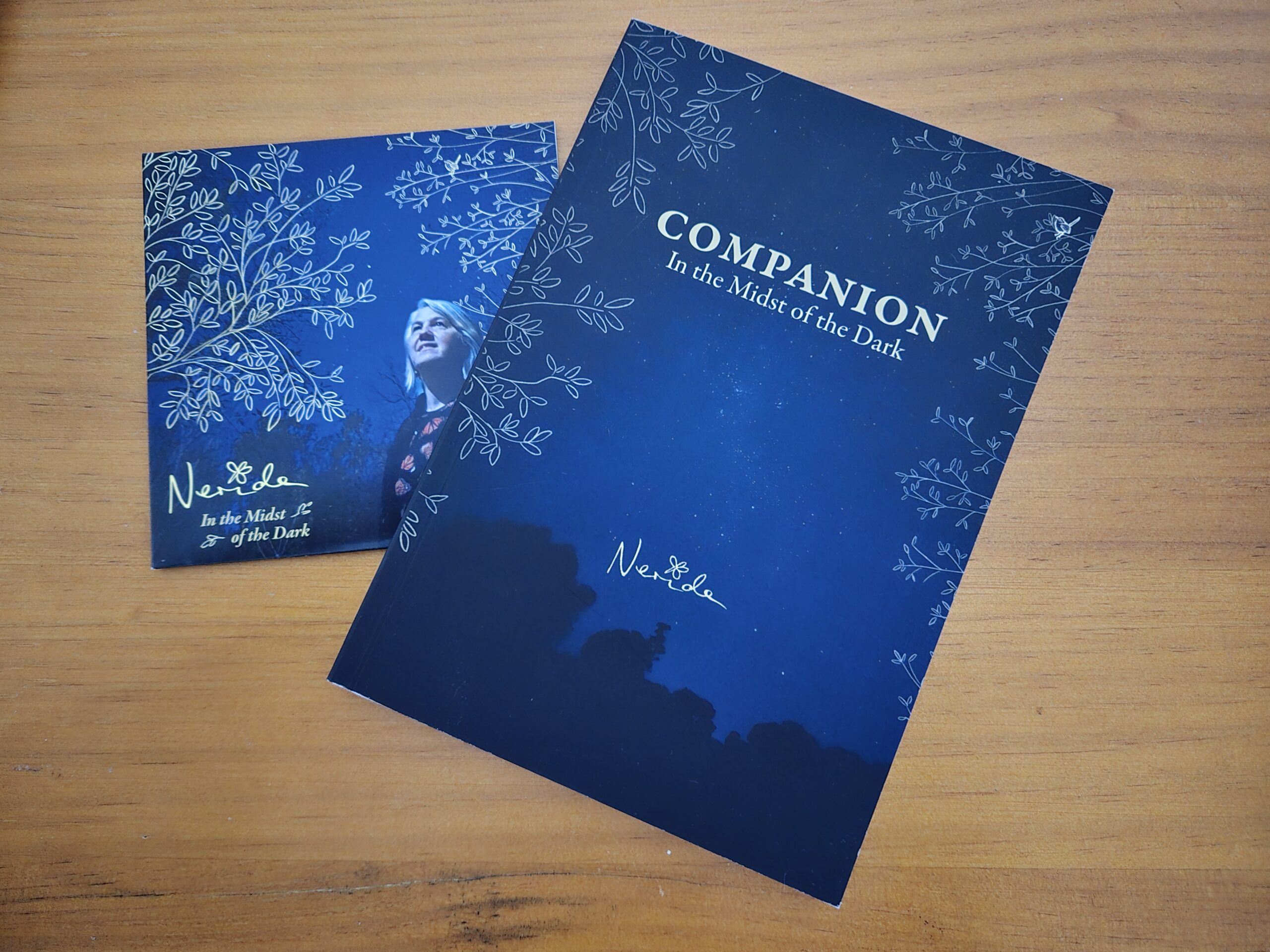
Nerida. In the Midst of the Dark, Bandcamp 2025. Album and companion book.
Raw and real perhaps best describe the latest album and companion book from regional NSW artist Nerida.
In the Midst of the Dark combines music, photography and poetry to reflect on the darker aspects of faith: finding God through grief, pain and losing oneself.
In a world where Christian music channels are compulsively drawn to pop-rock, this album is refreshing in its willingness to acknowledge faith does not preclude heartbreak.
Nerida has poured her personal experiences into her art, creating a work that is deeply relatable and evocative for listeners and readers, weaving her vulnerability through poetry, scripture, images and journal entries.
Released earlier this year, the album has a distinctly Australian sound, drawing on folk, ballad and blues. The Australian landscape is also featured through the book’s stunning photography.
While the book is divided into five chapters, it can also be understood through three sections, or aspects of the journey through lostness, lament and rest.
The book and album begin with “True North,” a search for direction when one feels lost. While the song begins “I found myself a stranger in my own story,” the chapter opens with an epigraph from Nerida’s 2022 journals: “I felt God was absent from me because I was absent from me.”
Her honesty could be shocking to some. It gives permission to feel, while making sure the reader and listener understand this is not just a story; this is the very real experience of the writer.
“Deep, Deep Wells” meditates on surviving when the things we have depended on, our “wells,” have inevitably become dry. But Nerida’s humour directs her work toward hope, not despair. The cautionary tale “Old Man Bitterness” is lightened by the use of smooth jazz and blues, transporting listeners to a smoky piano bar with the rhythm brushes of the 1920s.
Her exploration of the dark humour found in times of lostness speaks to a deep resilience that comes from the mercy of God.
“Psalm of Lament” draws on the tradition of lament in psalms, some of which Nerida includes to illustrate their influence on her.
The chorus is enveloped in poetry that shows the traumatised believer trying to find themselves again:
“Hear my cry, prove yourself true,
this life is nothing, not without you.
I’m trapped in the darkness,
won’t you reach through and bring me home?”
The poem “Post-Trauma” confronts with “You can no longer say, Don’t be silly! It won’t happen to me,” while “Tying Ourselves Up” illustrates the way we “tie it all up so nicely,” but while the “corners are perfect” on the outside, the string is “stretched and knotted.”
Referencing Walter Bruggemann, Nerida explores the disorientation God takes us through as he unravels those knots.
The final section on rest creates a sense of solace, calm and peace, even when circumstances have not changed.
One of the most evocative aspects of “Cool of the Night” is the live recording of cicadas, creating nostalgia for the cool Australian summer evenings.
The music, poetry and artworks are designed and curated to enable contemplation, reflection and healing.
There is a soothing of the soul in the darkness, as Nerida’s poem “Wait” suggests: “Even in the dark, you are there.”
Image: In the Midst of the Dark album and companion book by Nerida. Picture: Lesa Scholl
For communications strategy and services contact Key Change Communications. Follow us on Facebook and LinkedIn.