Who killed the radio star?
This article was first published in The Melbourne Anglican on 6 June 2025.
For the first time in its 25-year history, Australia’s official Christian music chart has no Australian artists in its top 30.
Today’s Christian Music lists the most-played songs on Christian radio stations across Australia each week. No Australian performers have made this list for almost a month.
According to performers, producers and radio stations alike, the absence of Australian music on playlists is the result of two decades of Aussie artists being squeezed out.
TCM founder Wes Jay said the radio industry is supportive of Australian Christian music but there are fewer songs available.
Mr Jay said there was a range of reasons for this, from lack of music managers and recording studios, to the ongoing effects of the COVID pandemic, to the smallness of the Australian market.
A larger number of Australian artists were moving to the USA, especially Nashville where there was a large Christian music industry, but the USA wanted to know about radio airtime, not how many social media followers a performer had, Mr Jay said.
He pointed out the number of followers available to an Australian artist was very small compared to those in countries with larger populations.
“The size of the Christian market in America is larger than the entire Australian music industry,” he said.
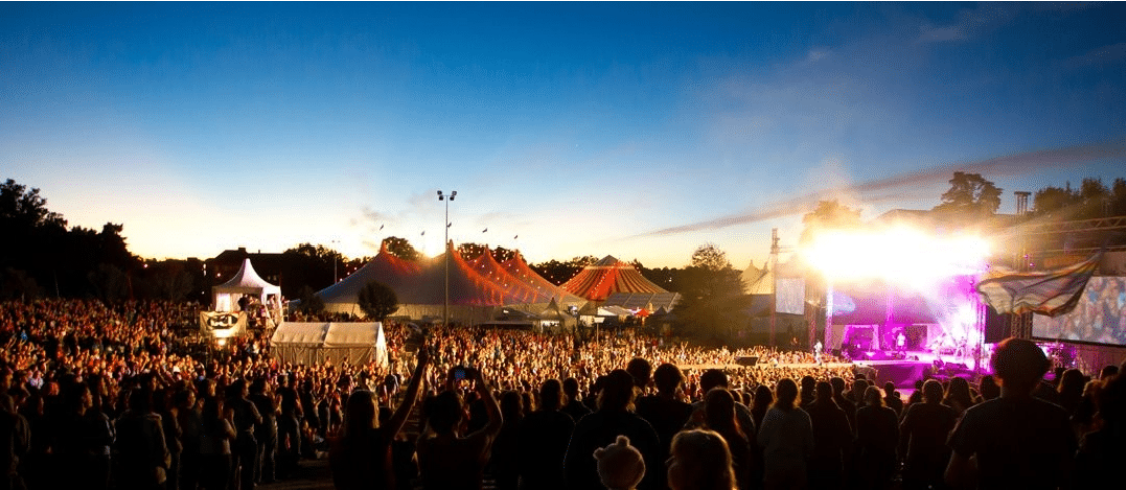
Mr Jay said the rise of Christian music festivals like Easterfest and Blackstump in the late 1990s and early 2000s created opportunity for performance for a range of artists and genres.
“But then alongside that, there was limited space on radio, and so there became competition,” he said. “That was maybe the downside, that people started to compete.”
Now, unless music is pop-oriented, Mr Jay said there was no room for it in mainstream Christian media.

Former member of Christian bands Paul Colman Trio and SonicFlood Grant Norsworthy said there were significant changes within the Church that made it more difficult for musicians over the last two decades.
Mr Norsworthy said there were more performance opportunities 20 years ago because there were less obvious divisions in the church.
He said there were more clearly defined barriers now and it was therefore harder to build rapport with the gatekeepers and church leaders.
He said twenty years ago it was easier to be booked by a range of denominational churches.
“But now it’s like, which brand are you bringing?” he said. “We’ve got our artists in our little silo here. We don’t really need anything from the outside.”

Sydney Anglican musician Nathan Tasker, now living in Nashville, said these silos affected the quality of music Australian artists were producing.
He said artists were meant to be on the forefront of breaking down barriers.
“That’s traditionally what great art does, right?” he said. “It would concern me if we’re creating art that might inadvertently reinforce the silos.”
He said Australian Christian musicians often lacked the opportunities to pursue great songs such as access to management, networks and collaboration.
The smallness of the Australian industry led to a protectionism that discouraged collaboration between artists, he said.
“When I was in Australia, I was writing all my songs on my own,” Mr Tasker said. “I’d never written with another person and then I came to Nashville and everything here is co-writing.”
“A great song is…a song that connects to people and bridges their heart and their mind,” he said. “But they just aren’t getting recorded and produced in a way that helps us to see they’re as great as they are.”
Mr Tasker said he spent a lot of money to record in Sony studios in Sydney but that collaboration was the way to turn a good song into a great song.
“The critique is the bit that matters the most,” he said. “You know that’s where you grow.”

Vision Christian Media chief executive Philip Edwards agreed Australian artists needed to saddle up alongside successful artists.
“We see the need to give them a voice,” he said. “[But] there’s a quality challenge there.”
Mr Edwards said Australian artists needed to write and record good songs and build relationships with the decision-makers.
This was difficult for new artists, however, who were mostly working as independents rather than being signed by a record company.
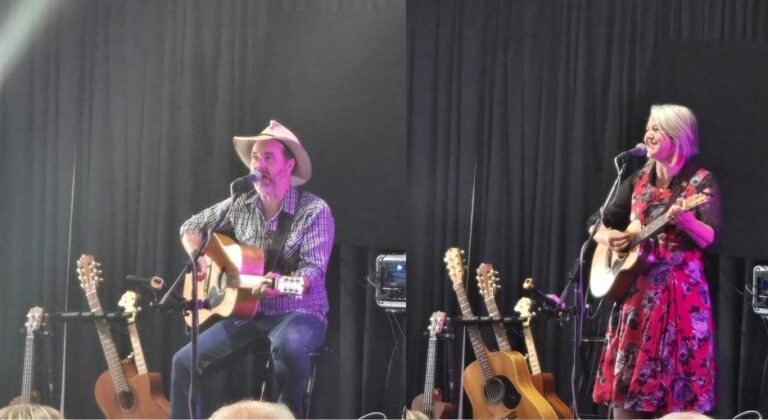
Australian artist Nerida, who blended folk and contemporary styles, found it challenging to distribute her music.
Nerida played the Christian festivals when she was younger, but now felt she did not fit the picture.
“I fear that by chasing the kind of pop commercial thing in Australia we’re denying Australian Christians what they need,” she said.
“We need to be able to know how to connect with God and each other when things are tough, not just when they’re going great,” she said. “If we’re only allowed to sing songs about life going great, then people are forced into dishonesty.”

Michelle Tumes felt she was just dabbling in the industry until she moved to Nashville in the late 1990s.
She said it was important to be resourceful and understand it wasn’t just about the music.
A lot of people told her it was too difficult, but she decided she would have to find a way.
“I celebrated the little wins,” she said. “A callback from someone…or someone said, ‘Oh, I really like what you do’.”
Positive Media chief executive Clayton Bjelan said it was sometimes difficult to hit the 25 per cent Australian content requirement for community radio stations.
He was optimistic that production quality was continually lifting.
But he said the last major stronghold of Australian Christian music was two decades ago.
“I think we lost that,” he said. “It was the last run of it, and there wasn’t the next generation [to replace] it.”
“It’s a problem,” Mr Bjelan said. “It’s a big system that’s working against it.”

He said Positive Media was trying to address the issue by launching a new Australian Music Showcase program, which they were offering for free to networks around the country.
“We specifically hear the stories, we play the music,” Mr Bjelan said.
Queensland-based Aussie Grown chief executive Hank David has been creating similar Christian music radio content, which has been picked up by community stations across the country.
Mr David challenged the belief that Australian artists were not good enough unless they went overseas.
“I dispute that,” he said. “We have nearly 3000 artists on our Aussie Grown radio website, and there would be less than a handful on there that wouldn’t be up to it.”
TCM has been campaigning to address the absence of Australians.
Mr Jay said he has contacted organisations and individuals who supply music to Christian stations, encouraging them to bring forward any Australian releases.
“It usually takes a few weeks for a song to get national traction,” he said. “I’ve been saying to them, this is an opportunity as the radio door is open.”
Featured image: A former mainstay of Australian Christian music, Easterfest was cancelled in 2015. Picture: Josh Woning
For communications strategy and services contact Key Change Communications. Follow us on Facebook and LinkedIn.